






AI Observability & Evaluations

LLM observability and evaluations for production AI

Tracing, LLM-as-a-judge scoring, custom evals, and guardrails for every AI call. Test agents and apps before you ship — EU-hosted by default.

Automatic quality scoring and observations in action

Trusted by 50k+ developers and companies serving 10M+ users

AI-BOB
Aixia
Evroc
GetTested
Instabridge
Ping Payments
Steep
Svenska Bostäder

Challenge

How do you monitor AI quality in production?

You can't improve what you can't measure, and you can't debug what you can't see.

Non-Deterministic Outputs

AI models are probabilistic. The same input can produce different outputs, making consistent quality difficult without testing and monitoring.

Lack of Visibility

When AI fails, you can't see why. Bad prompt? Hallucination? Data issue? Without observability, debugging is guesswork.

No Safety Guardrails

No monitoring for inappropriate content, PII leaks, or policy violations means significant business risk. Post-production discovery is too late.

Manual Quality Checks

Manual review doesn't scale. Automated evaluations are needed, but building evaluation infrastructure takes months.

The Opper Way

Testing and evaluation built in

Automatic quality scoring, custom metrics, and dataset evaluations. Track what matters for your AI applications.

LLM as a Judge

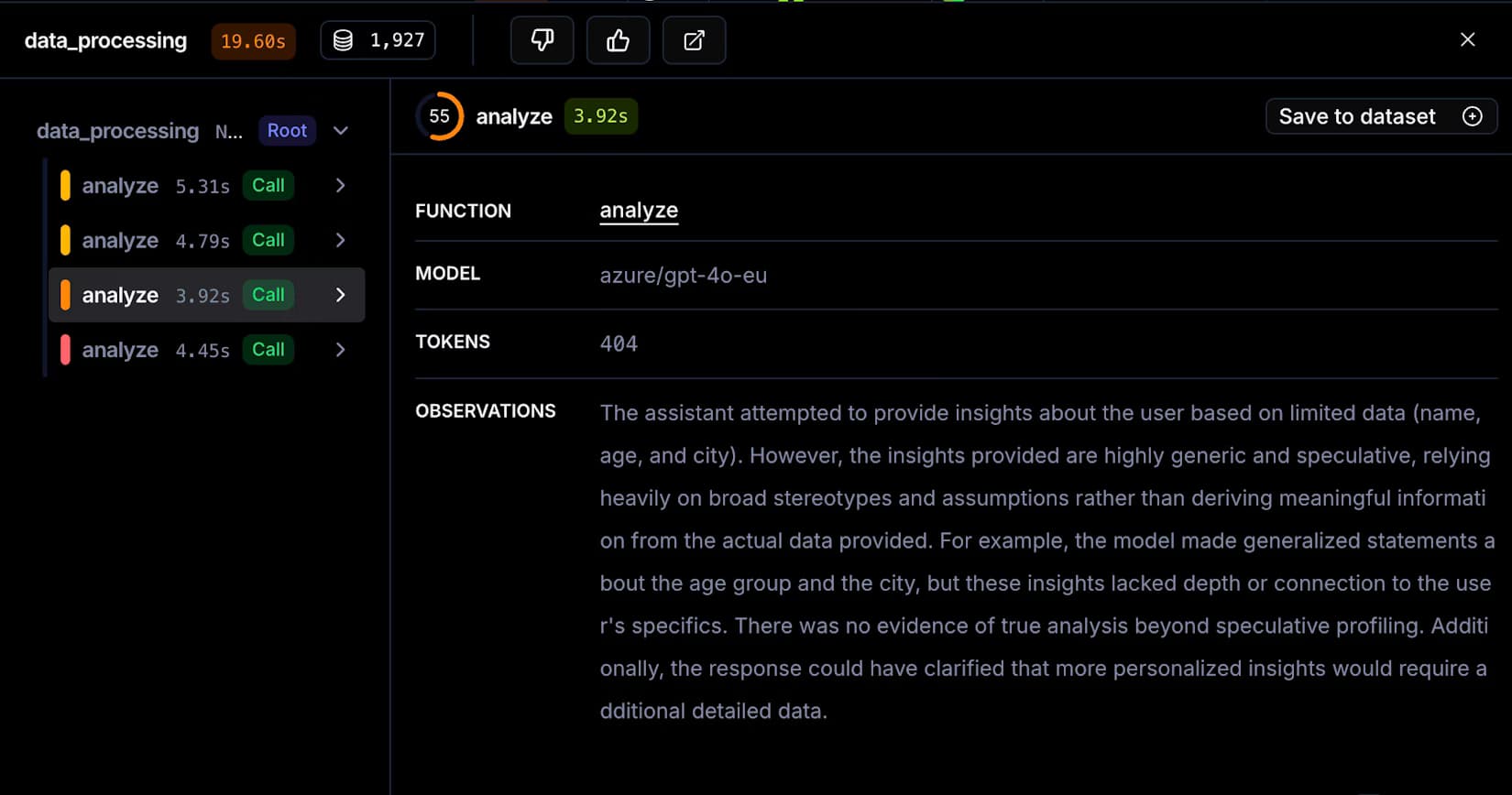
Automatic quality scoring

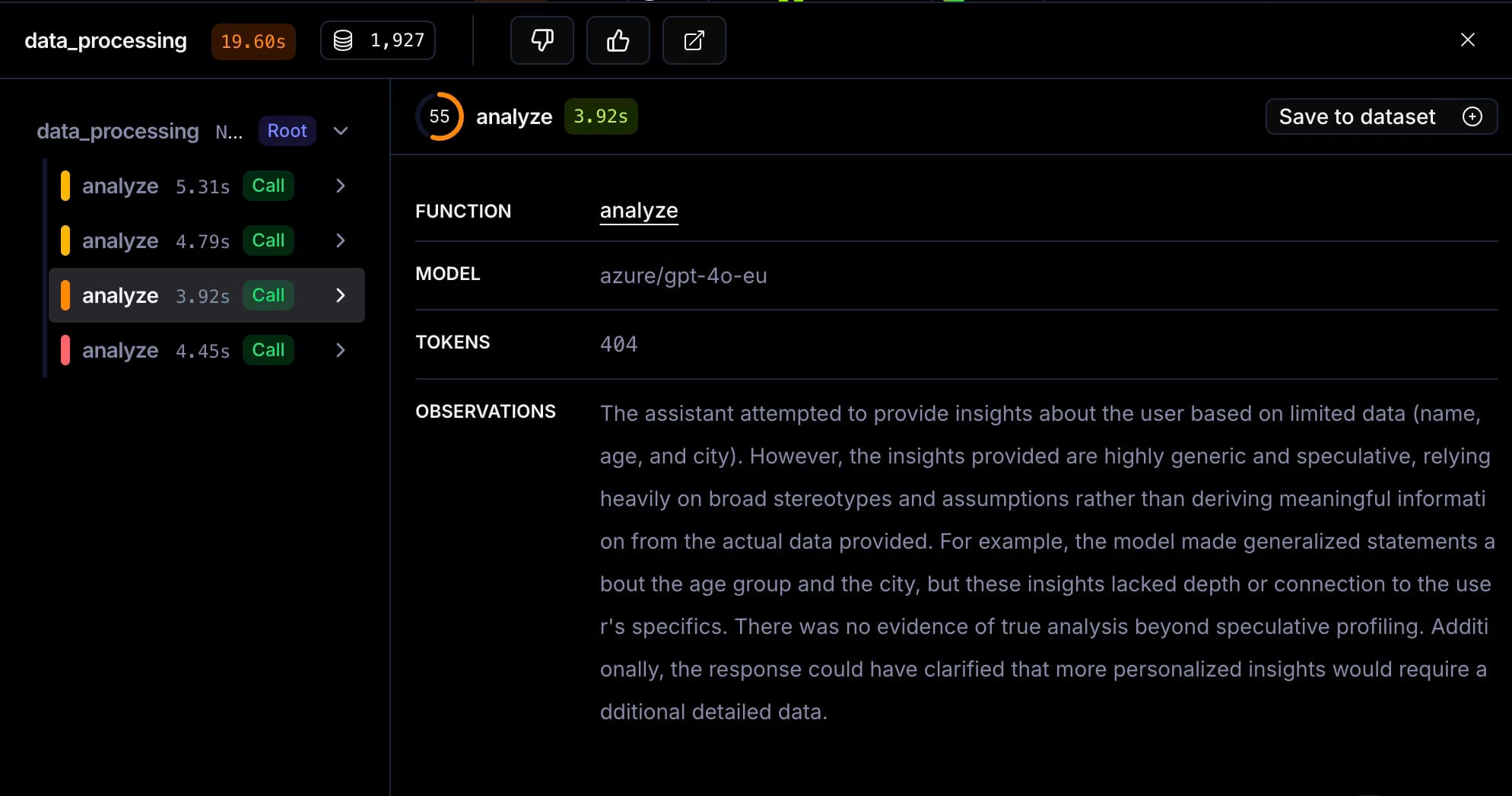
Every task completion gets a quality observation within 1-10 seconds. View summary and 0-100 score in the tracing UI.

  • LLM-as-a-judge on every completion
  • Score from 0-100 with detailed observations
  • Paragraph summary of completion quality

Pick a judge from 300+ models
Automatic observation with quality score
Custom Metrics

Track custom metrics

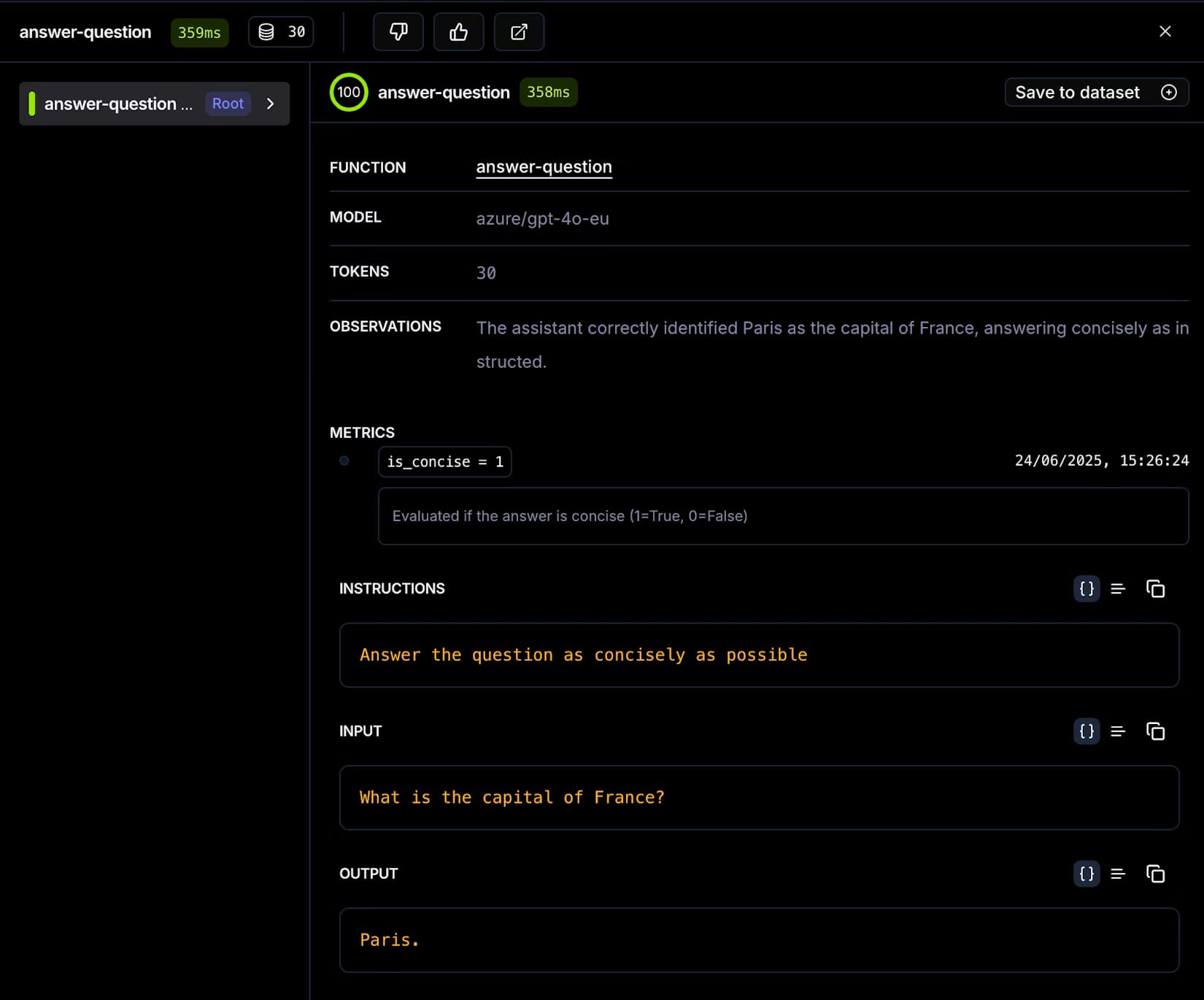
Attach custom metrics to task completions or spans. Measure conciseness, relevance, accuracy—any dimension you choose. All metrics tracked and visible in traces.

  • Define custom evaluation dimensions
  • Attach metrics to any span or completion
  • Track metrics over time and across versions
Monitor all models through one gateway
Custom metrics attached to task completions
Dataset Evaluation

Test before deploying

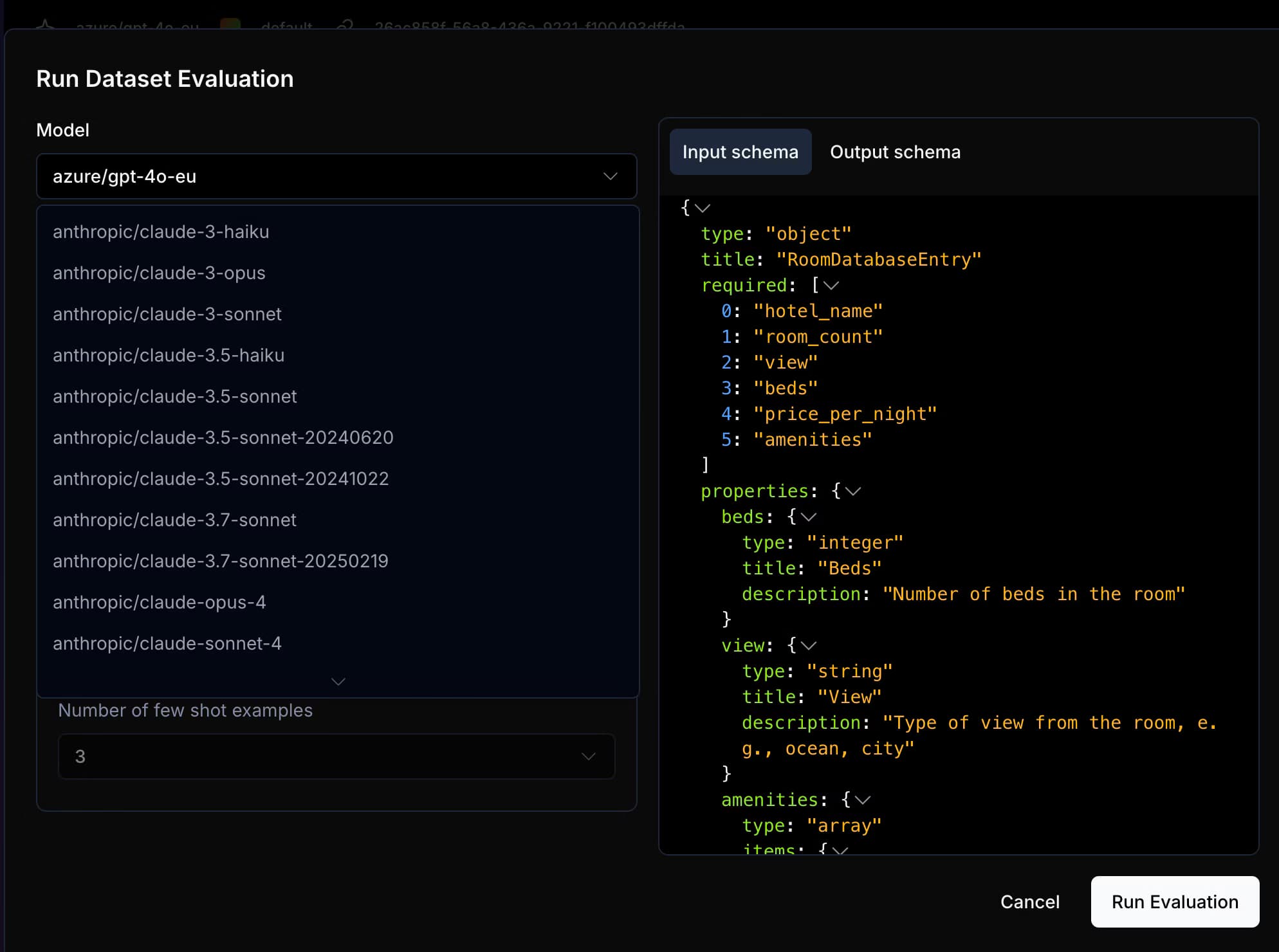
Run evaluations against task datasets to test new models, prompts, or configurations. Compare results side-by-side before production changes.

  • Evaluate against full task datasets
  • Test different models and configurations
  • Compare results before deploying changes
Improve quality with few-shot examples
Running dataset evaluations
Structured Quality Checks

Declarative task definitions

Structured, declarative tasks are easier to evaluate than raw LLM completions. Define clear schemas and requirements for consistent evaluations.

  • Schema-enforced input and output validation
  • Structured task definitions improve evaluation quality
  • Clear expectations lead to accurate quality scoring
See the JSON API
Score Schema
class Score(BaseModel):
    thoughts: str = Field(
        description="Thoughts on how to evaluate the response",
    )
    observations: str = Field(
        description="Observations about the operation and the response",
    )
    correct: bool = Field(
        description="Did the model succeed at handling the task or not?",
    )
    score: float = Field(
        description="A value between 0 and 100 reflecting the quality of the response given the instructions, input and expected output",
    )

Better schema annotations lead to clearer tasks and more accurate evaluations.

Built-in Guardrails

Real-time safety monitoring

Automatic safety and policy monitoring. Track blocked prompts, content violations, and safety interventions in production.

  • Real-time content filtering and monitoring
  • Track policy violations and blocked requests
  • Compliance reporting and audit trails
Part of Opper's AI agent control plane
Guardrail Monitoring
Content SafetyActive
Blocked: 23 requests today
PII DetectionActive
Filtered: 8 instances today
Prompt InjectionActive
Detected: 2 attempts today

FAQ

LLM observability & evaluation FAQ

What is LLM observability?

+
LLM observability is the practice of capturing every input, output, intermediate step, and metric from a large language model call so you can debug failures, track quality, and understand cost. It combines tracing (what happened on each call), evaluation (was the output any good), and monitoring (how is the system behaving in aggregate). Opper provides all three through a single platform, with traces, scores, and dataset evals built in.

How do you evaluate LLM outputs in production?

+
Two complementary approaches: dataset evaluations run a candidate model, prompt, or configuration against a fixed set of examples before you ship — useful for regression testing. Production evaluations score live traffic with LLM-as-a-judge or custom metrics, so you can detect drift and quality regressions after deploy. Opper supports both: define a dataset, run it against any of 300+ models via the LLM Gateway, then keep scoring every production call automatically.

What is LLM-as-a-judge?

+
LLM-as-a-judge means using a strong language model to grade another model's output against a rubric — checking correctness, relevance, safety, or any custom dimension you define. It's faster and cheaper than human review, scales to every call, and gives you a numerical score you can monitor over time. Opper runs LLM-as-a-judge on every completion automatically and surfaces the score plus a written observation in the trace UI.

What are LLM guardrails?

+
Guardrails are real-time policy checks that sit between your application and the model. They filter prompt injections, mask PII before it reaches the provider, block unsafe outputs, and enforce content policy. Opper's guardrails run inline on every call, log every intervention, and produce audit trails for compliance.

Is Opper observability EU-hosted?

+
Yes. Traces, evals, and logs are stored in EU regions by default. Opper is a Swedish company, GDPR-ready, and offers EU-only model routing so prompts and completions never leave European infrastructure unless you explicitly opt in. See the security overview for details on data residency and sub-processors.
How AI-BOB automates construction compliance

Case Study

How AI-BOB automates construction compliance

AI-BOB uses Opper's JSON API to transform plain-language building requirements into reliable, auditable compliance checks — with schema-enforced outputs, built-in evaluators, and full observability embedded directly in architects' workflows.

Ready to test your AI quality?

Measure and improve LLM quality with automatic observations, custom metrics, and dataset evaluations.

Get startedView Documentation